

Colleges Use VR and Simulated Patients to Train Nurses
New technology is increasingly used in nursing education. Colleges are adding digital and simulation tools to help students prepare for real-life nursing. Schools across the United States are using more technology in their programmes. These include virtual reality and high-tech mannequins that can replicate complex medical scenarios.
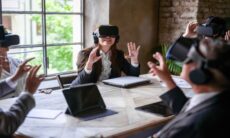
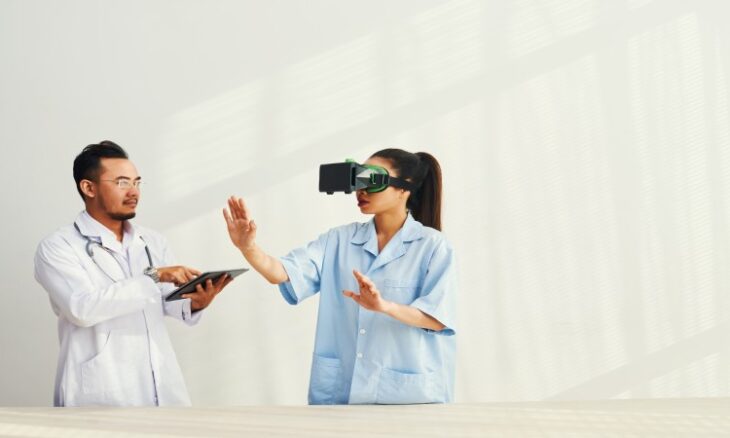
Some colleges use virtual reality to create simulated hospital settings. Students can practise nursing skills without working with real patients. Florida South Western State College has set up a special virtual reality lab. In these labs, nursing students wear headsets to enter pretend patient rooms and do regular nursing tasks by following set steps.
The system lets students perform routine clinical steps in a digital environment. They interact with simulated patients and medical equipment. The simulations replicate typical nursing procedures while eliminating the risks of practising on actual patients.
In these practice sessions, students do several things. They walk into patient rooms, check on patients, and follow treatment steps in a virtual setting. Older computer programs usually just have students watch information or pick answers on a screen. Virtual reality allows students to complete tasks themselves as part of the training.
Educators also use the technology to allow students to practise procedures repeatedly and correct errors during the exercise. Teachers also use this technology so students can follow their process and practise the same steps many times and fix mistakes as they go. Since it is all pretend, any errors made during training do not put real patients at risk.
They are also using advanced mannequins designed to imitate the responses of real patients. Missoula College in Montana has introduced programmable mannequins that instructors can configure to display a range of medical conditions and emergencies. These include scenarios such as severe diabetic reactions or the onset of sepsis.
During these practice sessions, nursing students work with the programmable mannequins just like they would with real patients. The mannequins can get better or worse depending on what the students do, so students have to check their condition and give the right care.
Teachers can change the situation at any time during the practice. This means the patient’s condition can change quickly. It lets teachers show students situations they might not see during regular hospital training.
Clinical placements in hospitals do not always expose students to serious or rare medical emergencies. Real patient problems are unpredictable and cannot be planned for training. Programmable mannequins let teachers create these situations during practice sessions, offering focused training opportunities that may not always occur during hospital placements. In clinical environments, students may spend time observing routine care and may not encounter complex emergencies during their placements.
Studies on practice-based learning usually show that students become more confident and better at nursing skills. Some researchers are still looking at how well this training works in real-life, unforeseeable situations.
More studies may be needed to see how practice-based learning affects students in the long run. As nursing education changes, many programmes are mixing practice sessions with real hospital training. This gives students more hands-on experience before they start working as nurses.